- Author: Aqsa Khan
Date: Oct 17, 2025 - Category : 2D Animation, Animation Studios



You have likely fantasized about making animation your full-time job, and then you ask yourself, How much do animators really make? The responses are not easy to identify. You read about huge paychecks in large studios, but what about freelancers, independent productions, or the day-to-day job that most animators perform?
Animator Salary varies based on a combination of factors, such as the place of residence, years of experience, field of specialty, and whether you are employed full-time by a firm or a freelancer.
An average animator’s salary in the United States usually ranges between approximately $40,000 and $130,000.
In this blog, we’ll first explore the animation market and its growth, then break down animator salaries across experience levels, industries, and work setups, so you can get a clear picture of what to expect.
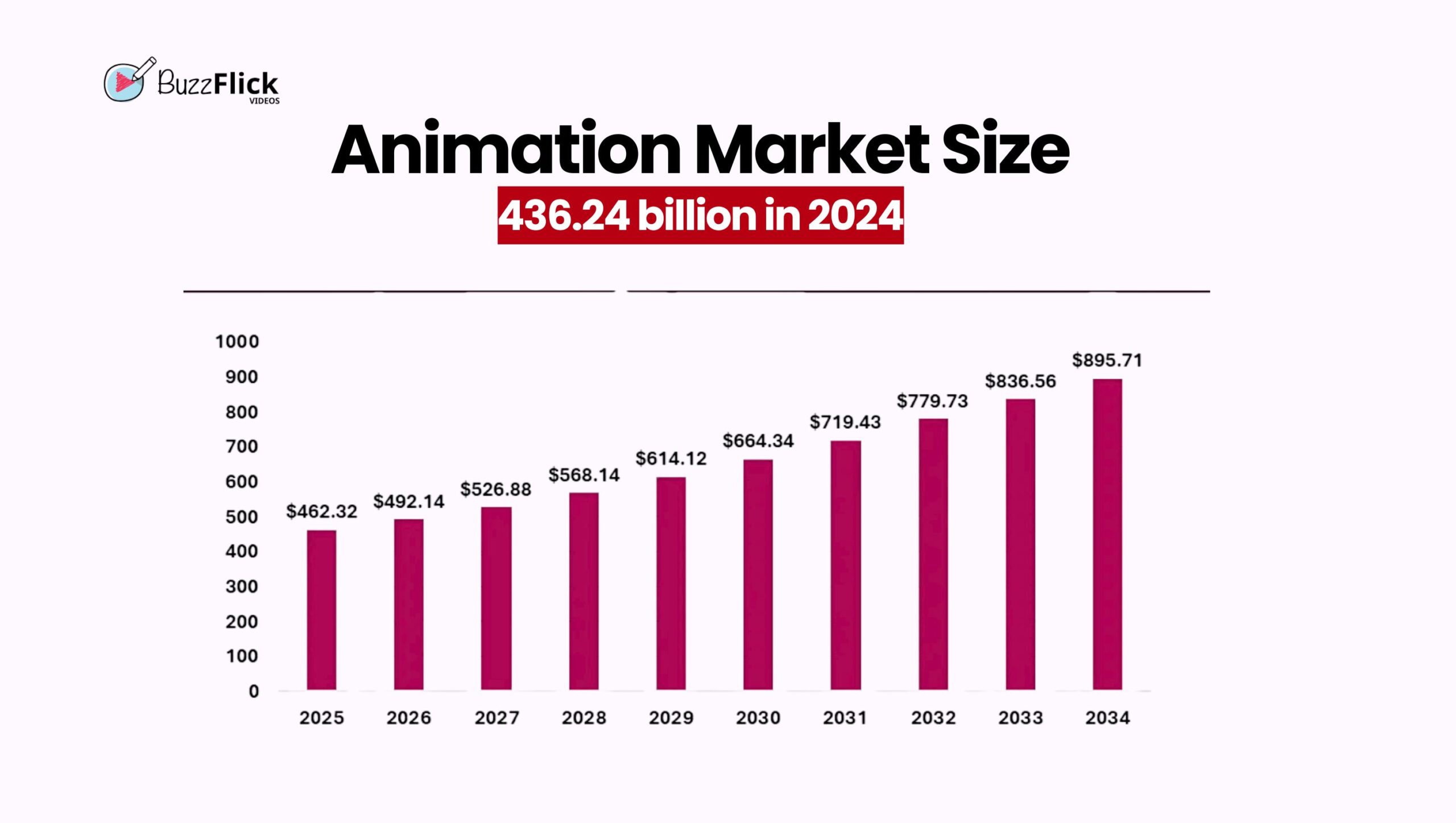
The animation sector is growing at a rate never seen before due to technological progress, the emergence of streaming services, and the increasing demand for animated content in different fields. The following is a snapshot of how the industry looks now:
Industry Segments Driving Growth
Animation Is A $436 Billion Industry; Now's Your Chance To Join The Boom
Step Into the Animation Market!
As animation is increasingly applied in films, games, advertisements, and corporate media, talented animators are enjoying more and more opportunities and higher pay. The following are the major forces behind this demand and the industry.
Not every career in animation advances at the same rate, but there definitely exists a trend: the longer you have been in the business, the bigger your paycheck is. The following is a rough overview of the typical rise in salary:
| Experience Level | Average Salary Range | Hourly Rate |
| Entry-Level (0–2 years) | $40,000 – $50,000 | $17 – $24 |
| Mid-Level (3–7 years) | $50,000 – $75,000 | $25 – $36 |
| Senior-Level (8+ years) | $75,000 – $120,000 | $36 – $58 |
| Lead/Director | $100,000 – $200,000+ | $48 – $96+ |
Note: Freelancers typically earn between $25 and $75 per hour, with their income depending on their skill level and ability to maintain a steady stream of clients.
Animation is a very versatile industry, and specialization is a significant factor in the earning potential. The key categories of animators are the following:
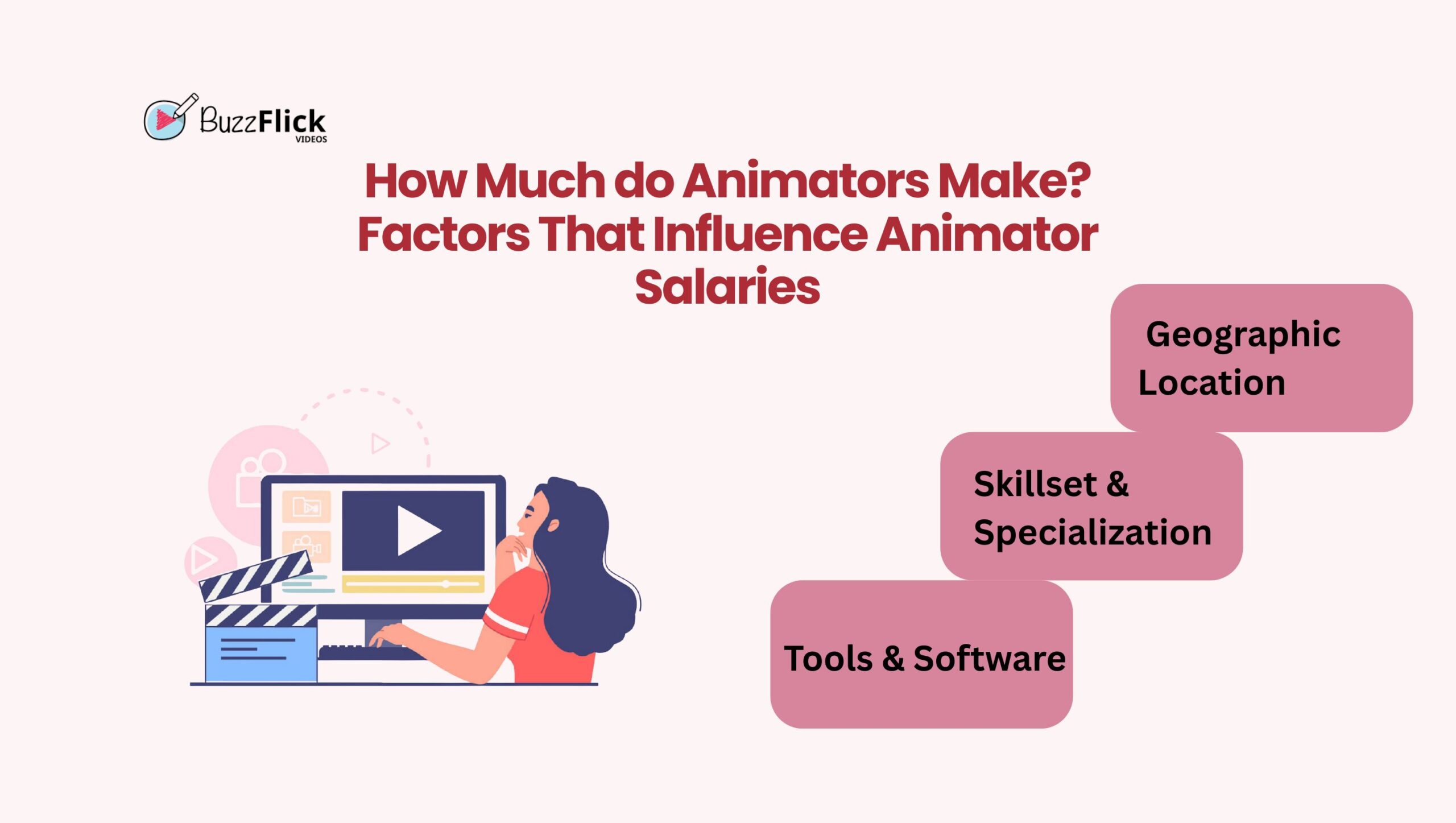
The animation sector is expanding rapidly, and it has prospects in games, advertising, streaming, and corporate media. The animator’s salary is more based on experience, specialization, and industry than on an average number.
Let’s break it down.
An animator’s salary is shaped by location and work setup. Large entertainment hubs often offer premium pay, whereas growing markets are providing increasingly attractive opportunities.
There are skills that earn a salary premium due to being rarer or yielding greater value in production:
VFX & Effects Animation: These tend to command a higher wage than generic 2D or basic motion graphics, with mean salaries significantly higher than elementary animator positions.
Character Rigging & Performance Animation: These are high-ticket skills, especially for film and AAA game production, and therefore are some of the most in-demand specializations.
Real-Time / Unreal Engine & Game-Engine Skills: Employers are increasingly willing to pay a salary premium for workers who can manage real-time tools that speed up production. Job postings that call for these capabilities are routinely on the increase.
Technical Directors / Pipeline Engineers: Specialists who communicate between art and engineering tend to earn much more than regular animators, due to their capacity to streamline pipelines and resolve technical impediments.
Creativity gets noticed in your portfolio, but knowing the right software often seals the deal.
Keeping your skills current and showcasing real projects with these tools makes you more competitive and often leads to higher offers.
Salaries of animators do not only rely on skills or experience, they also largely rely on the nature of employment you take. All these models mentioned below have their positive and negative aspects and possible incomes. So have a look!
Freelancing is the most flexible with the most potential for high payments on special projects. Experienced freelancers (especially VFX, rigging, or real-time animation) can earn between 30 and 100+ an hour, depending on experience and project demand.
Freelancers have an opportunity to deal with a variety of clients, and it may result in substantial earnings when they cope with their jobs effectively.
Pros:
Cons:
Full-time jobs are stable, have benefits, and are predictable in terms of salaries. Some entry-level animators can begin with a salary between 40,000 and 55,000 a year, and some mid-level employees and senior positions earn between 60,000 to 85,000 and 90,000 to 130,000, respectively.
Full-time jobs are best suited to individuals who want to have a consistent salary, mentoring, and a well-defined career.
Pros:
Cons:
Contract work is between freelance and full-time. The time of the contract can be several weeks to months, and it is usually associated with a project or production. In high-demand positions, the weekly or monthly wages of contract animators are normally higher than those of full-time workers.
Pros:
Cons:
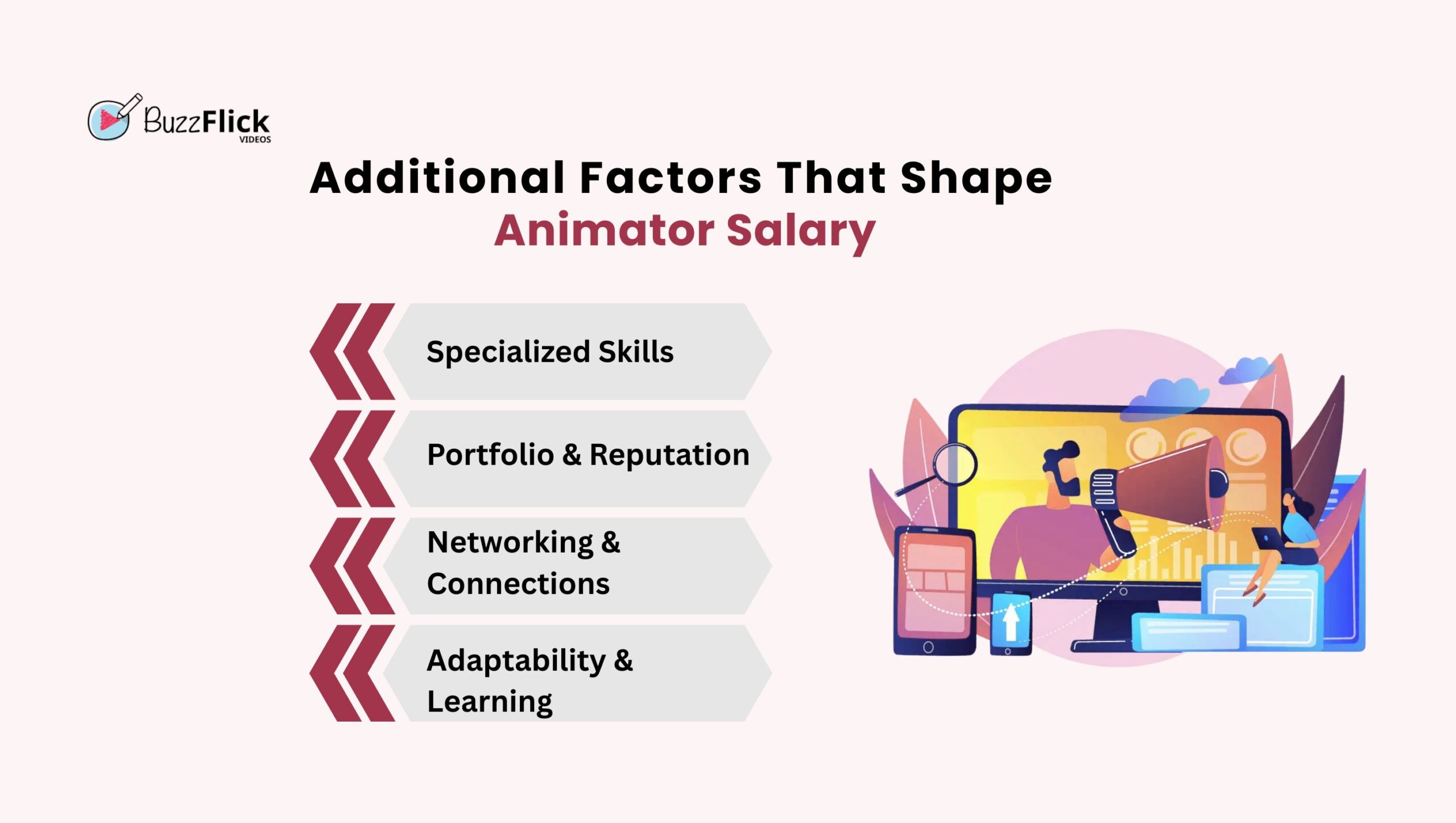
The salaries of the animators depend on more than the location and experience. Other aspects can also influence a lot the amount you earn based on your abilities, fame, and work ethic.
Skills that have high demand, such as VFX, rigging, or real-time animation, make you more profitable. The level of industry-standard software increases market value. Employers are willing to pay a premium to acquire expertise in matters that have a direct influence on production quality and efficiency.
A good polished portfolio and a good reputation in the industry open the doors to good projects and better-paying jobs. Demonstrating diversity and quality performance will make you stand out from the crowd of candidates.
Referrals, exclusive gigs, and better job opportunities can be achieved by building professional relationships and attending industry events. This is because being connected allows you to be informed about high-value projects before the advertisement to the entire community. A strong network usually results in mentorship, partnerships, and career development.
It is important to be up to date with the new tools, trends, and technologies so as to be relevant and in demand in the dynamic animation world. Continuing learners will be able to work on more advanced and highly compensated projects.
One may find it hard to locate the right animation job, and the right resources will change everything. Here’s where to start:
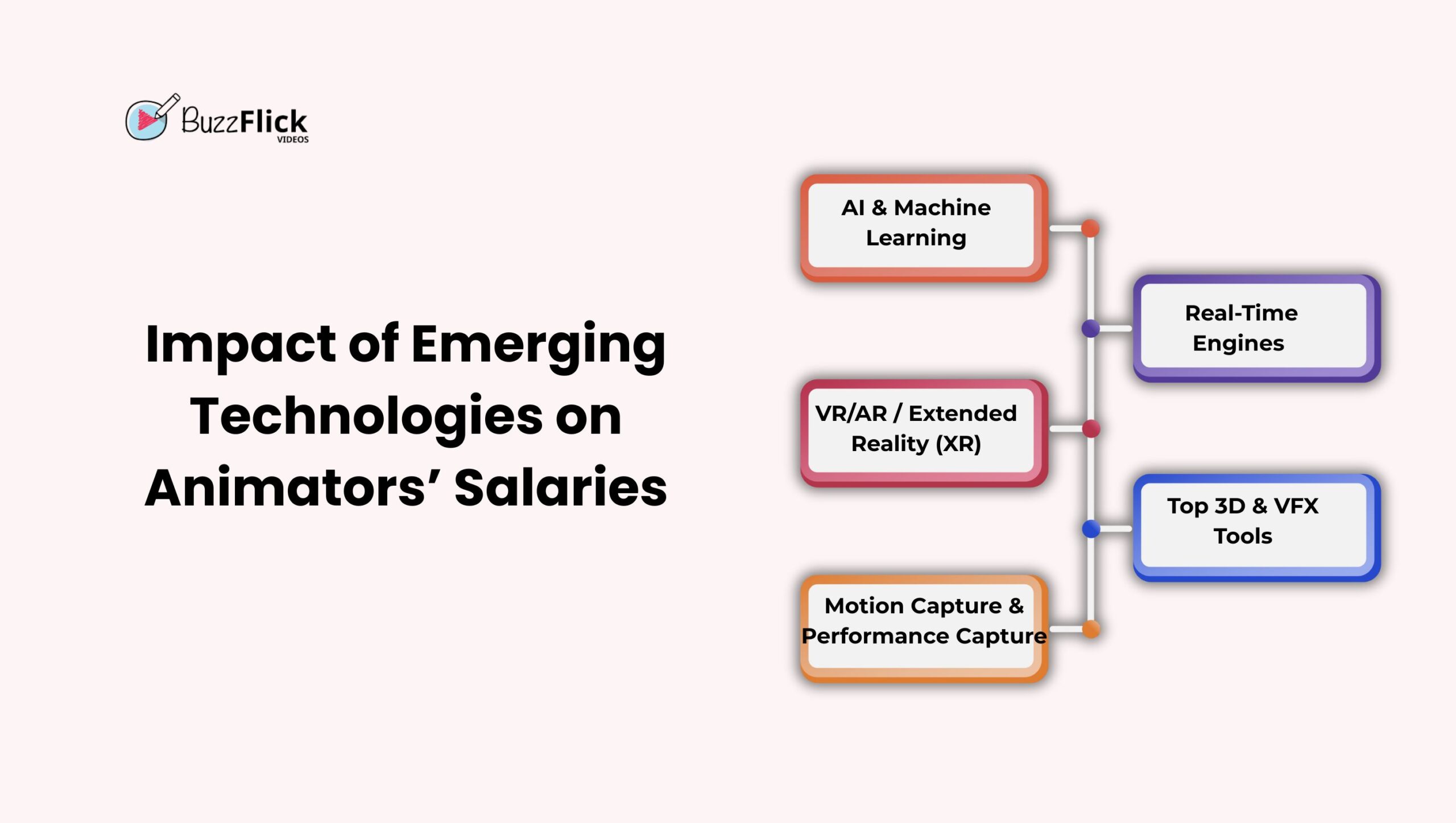
With the continuing improvement in animation technology, keeping up with the times can be a direct influence on the animator’s salary. More opportunities and higher remuneration are becoming available to in-demand specialized skills.
AI & Machine Learning: Repetitive tasks like in-betweening or lip-syncing can be automated with the help of AI-powered tools, which can give animators more time to create. Individuals who can integrate AI practices in animation are in high demand and tend to receive a large salary.
Real-Time Engines (Unity and Unreal Engine): As VR, AR, and cinematic experiences are based on real-time rendering, animators who are proficient in these engines are being paid the top amount of money.
VR/AR / Extended Reality (XR): With the growth of immersive work, the animators who are knowledgeable of spatial narrative, 3D interaction, and movement in virtual space are able to command special wages.
Top 3D & VFX Tools: Senior roles that require the mastery of such tools as Houdini, Nuke, or Blender to perform simulations, visual effects, and complicated animations can offer high salaries far beyond industry rates.
Motion Capture & Performance Capture: The skills of mocap technology (or capturing realistic human motion) to use in games, films, or VR are in demand. Mocap animators receive higher salaries because of the niche workload.
Being an animator is a very exciting and rewarding career, though it is necessary to know the financial aspect of the industry. The animator’s salary depends on experience, specialization, industry, and location, and being aware of what to expect can help prepare your career path.
At BuzzFlick, we have witnessed the potential difference that the right skills, training, and portfolio can make in earning potential. Regardless of whether you specialize in 2D animation , 3D animation , motion graphics, or VFX, through constant polishing of your trade and adjusting to current industry trends, opportunities that are well-paying will come your way.
BuzzFlick, being a top-tier animation studio, is dedicated to the success of aspiring and professional animators. We offer the tools, experience, and industry expertise you need to excel in hands-on projects, or in tips on the most effective strategies, so you can be sure of developing a professional career that is creative and financially satisfying.
The typical animator salary is around $99,800 a year, but that can be much higher or lower depending on your experience and where you work. On an hourly basis, that’s about $47.98.
Breaking it down monthly, an entry-level animator may earn approximately $3,300–$4,600 per month, whereas experienced professionals in major studios can earn $7,500–$10,000+ per month.
Yes, especially in high-demand specializations and major markets. While entry-level salaries can be modest, experienced animators in 3D, VFX, VR/AR, or AI-assisted animation can earn competitive, six-figure incomes.
Not always. While degrees can help land certain studio jobs, practical experience, a strong portfolio, and software proficiency often weigh just as heavily in salary potential.
When it comes to animator salary, feature films and AAA game studios typically offer the highest pay, while advertising, educational, or indie projects may provide lower salaries but often come with greater flexibility and creative freedom.

Chromebooks have grown from just for typing essays and watching skits to letting everyone test their creativity in their desired ways. Yes, those days are...
Read More
Get A Custom Quote Now


Copyright © Buzzflick 2026, All Rights Reserved.
Get Video Animation at Reasonable Prices at BuzzFlick! Get A Quote!