- Author: Eich Eyf
Date: Mar 18, 2022 - Category : 2D Animation



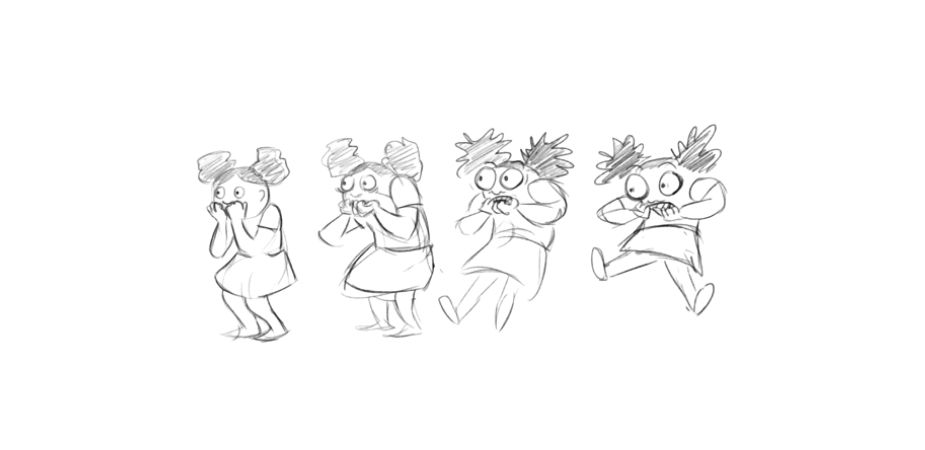
How can animators bring a blank canvas to life? How can they convince us to empathize with Pascal, laugh at Carl, and sense Ariel’s need to be a part of your world? How can they convince us that the objects they’ve represented are truly alive?
To begin answering any of these questions, one must first comprehend the 12 animation principles and one of them is staging in animation.
Disney’s 12 principles of animation, made famous by two of Walt Disney’s famed Nine Old Men, Ollie Johnston and Frank Thomas, have become a must-know for all aspiring and current animators in the business today.
So, we’ll shed light on the 3rd principle of animation – Staging. We believe it’s one of the most important principles that can make or break your animation.
In 1981, Disney animators Ollie Johnston and Frank Thomas published a book titled The Illusion of Life: Disney Animation, which Ollie Johnston and Frank Thomas wrote. The book, which has been a significant resource for animators all around the world since its publication, defined the 12 essential principles of animation, which are still relevant today.
In the book, The Illusion of Life: Disney Animation, Ollie and Frank defined Staging as,
“It is the presentation of an idea so that it is completely and unmistakably clear. An action is staged so that it is understood, a personality so that it is recognizable, an expression so that it can be seen, a mood so that it will affect the audience.”
This principle helps animators portray a particular expression or mood to the audience while diverting their focus from unimportant elements or details in a specific scene or frame.
Staging makes the animation purpose flawlessly clear to the audience and viewer. Staging is actually the process of setting up scene in animation; It includes the character’s placement, setting the elements of background and foreground, the mood of characters, and how you setup the camera angle.
Staging is the process of drawing the viewer’s attention to a particular scene. In order to draw the viewer’s attention, animators use a variety of poses and actions of the characters, as well as their positioning in the frame, the background, and other aspects of the scene.
In this method, animators can convey to the audience the atmosphere, reactions, and feelings of characters in a particular story by using animation techniques. In addition, staging can assist in informing an audience about the narrative.
The staging of a story is an extremely effective instrument in telling a story. In every scene, the animator strives to create a cohesive composition. Staging is intertwined with the elements of acting, time, and setting.
First and foremost, the emphasis should be maintained on what is truly important. It is possible to achieve this by a variety of techniques, including the location of a character in the frame, the angle and position of the camera, and so on.
To achieve success, he or she must adhere to the following principles:
As a result, the background, foreground, and characters should all function in harmony and complement one another. They should convey your characters’ objectives with each pose or action.
This will assist the audience incorrectly interpreting the message you are conveying. This is especially critical for educational videos, explainer videos, and the like.
The staging principle in animation is used to plan how you set up your scene, from the placement of elements in background and foreground to the character’s placement, mood, and how you setup your camera angle. Staging is like setting up a scene to make sure people easily understand what is the message in this animation.
Animation videos should be developed in the same way as more complicated things are. There are numerous staging approaches and technologies that can assist an animator in telling the tale more quickly.
Here are three staging suggestions with examples that will help you understand how to use staging
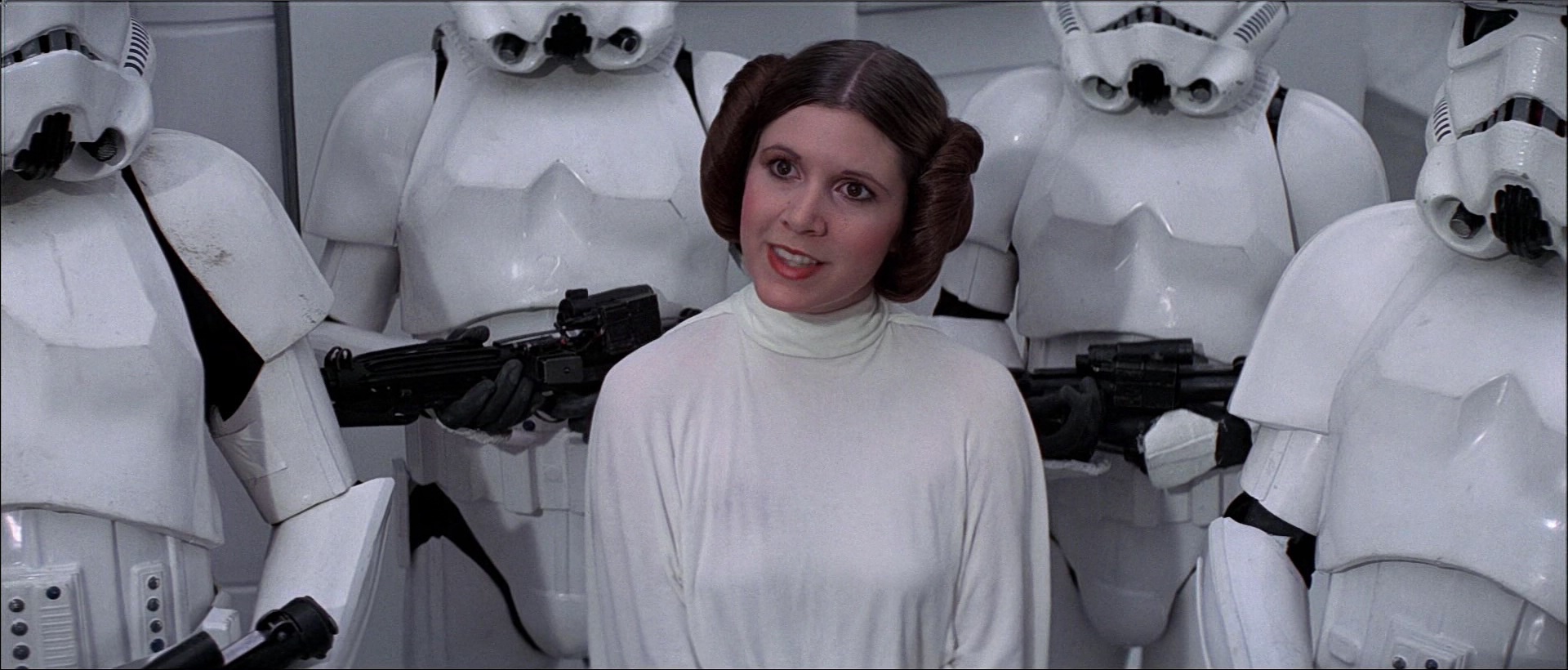
One simple strategy is to keep the characters of interest in the camera frame for half or a third of the frame. When you divide a frame of a shot in half or thirds and place the character in those areas, you are able to maintain the audience’s attention while also emphasizing the significance of that character to the audience.
Let’s take an example:
Our attention is drawn to Princess Leia, who occupies the middle third of the screen. Her character and the Empire are being revealed at this stage in the narrative. So, we can better focus on what she is saying because of the staging. A group of stormtroopers around her tells us that she is in peril.
Source: The Mary Sue
Sets, other characters, and camera angles can all be used to guide the audience’s emphasis in the direction you want it to go.
Let’s take an example:
The fact that all of the pilots are looking directly at Princess Leia grabs our attention. We can infer from this that she is making an important point. Similarly, she is encircled by orange and framed by two pilots in front of her. As a result, we pay close attention to what she has to say.
The direction in which a character appears to be moving or speaking is referred to as the screen direction. Consistent screen direction is critical for effectively communicating information to your audience.
Let’s take an example:
This sequence features a pivotal conversation between Luke Skywalker and Obi-Wan. To avoid confusion, each character’s screen direction remains consistent throughout the sequence. Even when only one of them is on screen, Luke is always on the right, while Obi-Wan is always on the left. This straightforward strategy keeps the audience focused and engaged throughout the conversation.
There are numerous staging approaches that can assist an animator, filmmakers, or storytellers in effectively communicating their message. Proper staging can amplify a character’s thoughts, a plot point, or a mood. The trick is to make a notion crystal obvious to the observer.
Staging is a fundamental animation principle of animation that is used to make the purpose of the animation obvious and clear to the audience and viewer. Through staging, you can keep the audience focus on what is need to be communicated and bypass details that are unnecessary to avoid making them confused.
If you know the staging in theatre and film, staging in animation is quite similar to it. Its purpose is to draw the attention of the audience to important scene and make the animation purpose clear to them. There are various ways to do that. The use of shadows and light, or the positioning and angle of the character, or the colors & weight.
The three main components of staging are:
There are 12 Disney principles of animation. These 12 animation principles for the professional animators is a combination of key teachings. The list was outlined by Ollie Johnston and Frank Thomas and a complete guideline for Disney animators since the 1930s. They were documented in the book The Illusion of Life: Disney Animation in 1981.
We have enlisted all of them below for your convenience:
We hope you have understood the significance of the staging in animation as the 3rd principle of animation and its application to create pitch-perfect animations.
As we know, brands are now commonly using animated videos to expand their business horizons. However, not every company owns a video production team, especially a team of animators.
If you’re one of those companies searching for video animation, then hire BuzzFlick – one of the top animation outsourcing companies offering profound video animation and production services. We have a competent team of animators who are capable of bringing your imagination to life.
From custom whiteboard video to post-production service, we offer it all at a very affordable cost.

Cut-out animation is one of the oldest animation styles. Read our short guide to learn everything about cut-out animation with useful examples.
Read More
Get A Custom Quote Now


Copyright © Buzzflick 2026, All Rights Reserved.
Get Video Animation at Reasonable Prices at BuzzFlick! Get A Quote!