- Author: Sophiea Ank
Date: Nov 3, 2025 - Category : 2D Animation, 3D Animation



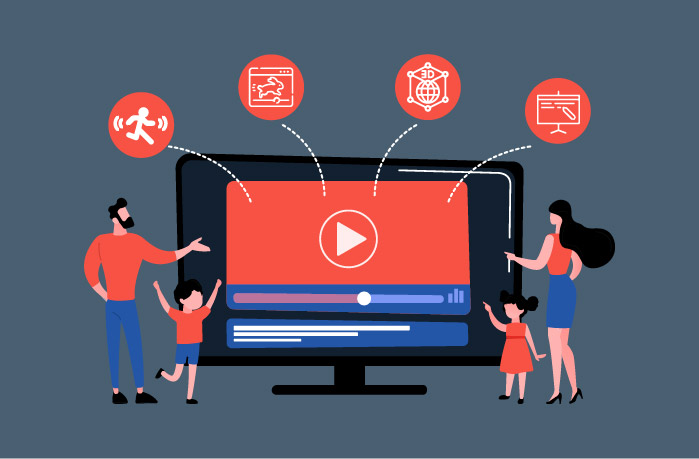
Animation isn’t just for cartoons or movies. It’s a powerful tool that helps brands communicate ideas, tell stories, and engage audiences. Whether it’s an explainer video or slick motion graphics, animation makes complex ideas simple and memorable.
This guide explains the need and uses of animation across industries, from marketing and education to healthcare and social media. You’ll see how animation can boost engagement and even drive conversions.
We’ll also cover different animation types and give tips to choose the right style for your project. By the end, you’ll understand why animation isn’t just “eye candy” but a strategic tool that works for businesses.
For businesses and content creators, the key applications of animation include:
Animation is a fundamental technique or video style of creating the illusion of movement by displaying a rapid sequence of static images, or frames, typically at 24 frames per second for smooth motion.
Historically, it involved hand-drawn art or stop motion. Now, the field is dominated by computer-generated imagery (CGI), encompassing 2D & 3D animation and motion graphics. This ability to bring concepts to life visually serves a core purpose: to simplify complex information and drive high viewer engagement.
Animation is a broad field, but it can be segmented into 5 types of animation based on the technique, dimension, and ultimate purpose. Let’s look into it:
2D animation utilizes static, flat images to create movement in a two-dimensional space. This includes traditional hand-drawn cel animation and modern digital, vector-based techniques.
Uses: Ideal for cartoons, television series, social media content, and creating visually appealing, cost-effective explainer videos that use an illustrative style to simplify complex processes.
Creates the illusion of depth and three-dimensional movement using complex Computer-Generated Imagery (CGI) models, rigging, and lighting.
Uses: Dominant in feature films, high-fidelity video games, detailed architectural and medical visualizations, and product demonstrations where realism or complex spatial interactions are required.
A physical, frame-by-frame process where objects like clay figures (Claymation), puppets, or paper cut-outs are meticulously adjusted and photographed in small increments.
Uses: Primarily chosen for its distinct, handcrafted, and textured aesthetic, lending itself well to artistic short films, television idents, and unique commercials that seek a nostalgic or tactile feel.
Focuses on bringing graphic design elements like text, logos, charts, and abstract shapes to life with dynamic movement and visual effects, often synchronized to a soundtrack.
Uses: Essential for title sequences, lower-thirds in news broadcasts, kinetic typography, animated infographics, and corporate branding videos that need to quickly convey data and polish.
A distinct style where the audience watches a hand or marker draw images and text onto a virtual or physical white surface in fast motion.
Uses: Highly effective in educational content and training modules, as the drawing process naturally captures and holds attention, guiding the viewer’s focus directly to the evolving concept and improving information retention.
Animation’s unparalleled ability to convey information, evoke emotion, and demonstrate complex processes makes it an indispensable tool across virtually every global sector.
Here are 15+ primary uses where motion graphics, 2D, and 3D animation drive key business, educational, and communication objectives:
The use of animation in education is transforming pedagogy by replacing static textbooks with interactive lessons. Animation excels at visualizing abstract concepts (e.g., mathematical formulas, molecular bonds), making learning more intuitive. This medium reduces cognitive load and keeps students engaged longer.
Studies show that animated educational videos can improve information retention rates by up to 15%, especially among younger learners. Peekaboo Kidz is known for its kids’ animated educational videos. Here, we have featured an episode from Dr. Binocs’ Show, where you can learn about various useful inventions in animation.
Animation has become a staple in digital marketing due to its effectiveness in condensing large amounts of information into short, engaging clips. These assets are vital components in the overall use of animation in multimedia strategy.
Brands and various companies incorporate animation in their advertisements and video marketing strategy to engage more eyes and gain popularity. Heinz is a food brand and released this animated advertisement years ago, but it’s still popular and fun to watch. Take a look.
P.S.: If you’re in search of a creative agency that can create this type of ad for your brand, then give a chance to Buzzflick top-rated video animation company, to fit your ideal animation partner.
This sector heavily relies on the precision of use of 3D animation for clinical and public health applications. Medical video production services allow professionals and trainees to visualize procedures and internal physiology at a microscopic level, which is impossible with live video. This includes detailed surgical simulations and mechanism-of-action videos for new drugs.
As per Grand View Research, the medical animation market is experiencing a rapid CAGR of over 18%. It drives primarily by its integration into surgical planning, medical device demonstration, and pharmaceutical marketing.
Architectural Visualization relies almost entirely on the uses of 3D animation to create realistic and photorealistic experiences of properties that have not yet been built. These 3D fly-through animations allow for immediate feedback on design, materials, and spatial dynamics. Consequently, it greatly accelerates the approval and pre-sale process.
High-quality 3D architectural renderings and animations are now leading to a significant increase in client engagement, and approval timesare cut by an average of 25% in large commercial projects.
Before committing to costly manufacturing, companies use 3D modeling services to test product assembly, visualize user interaction, and showcase complex internal mechanical workings. This application of animation saves time and resources by identifying design flaws early. It is a critical component of the engineering design review process.
StartsUs Insights reports that companies utilizing advanced digital prototyping report up to a 40% reduction in the need for physical prototypes, saving time in the development cycle.
Video games are one of the earliest industries that used animation. Game development totally depends upon two things: programming and animation.
Without animation, nothing can be done in game development. The medium forms the core of all immersive interactive experiences, generating character rigging, realistic physics, environmental interactions, and high-fidelity in-game cinematics.
The global games market report from NewZoo mentioned that video games using 3D characters and environmental animation, surpassed $180 billion in 2023. It underscores the massive global demand for high-quality animated content and interactive experiences.
The global animation market size is projected to exceed $600 billion by 2030. It is mainly propell by massive investments from streaming platforms (Netflix, Disney+, etc.) demanding original content and the proliferation of high-end character animation.
The uses of animation in entertainment go beyond traditional cartoons to include high-budget animated features and crucial visual effects (VFX) in live-action films. 3D animation is the dominant technique here, and many 3D animation production companies driving photo-realistic characters and sophisticated cinematic narratives that appeal to all ages. Take a look at this animated video trailer of Yasuka by Netflix.
Animation is the bridge between highly complex scientific data and public or peer comprehension. Researchers use sophisticated motion graphics and 3D simulations to communicate theoretical models or experimental findings in an accessible and convincing format, aiding both policy and funding efforts.
Static presentations lose audience attention quickly. Incorporating short motion graphics and animated charts in corporate videos maintains focus during high-stakes investor pitches, internal training rollouts, and board meetings. This represents a core use of animation in multimedia for the corporate world.
Optimized for fast consumption, short-form animated content (GIFs, animated infographics) is crucial for social media video marketing. The high shareability and rapid message delivery of these assets make them essential for building brand awareness and driving engagement.
Short-form animated video content on platforms like TikTok and Instagram often experiences double the shareability and engagement rates compared to static image posts or long-form videos.
Animation allows nonprofits to ethically address sensitive human-interest stories or visualize large-scale global issues (e.g., climate change, refugee crises) without exploiting the individuals involved. The emotional accessibility of 2D animation, in particular, is powerful for driving empathy and donations.
Campaigns that use emotionally animated storytelling often see up to a 35% increase in viewer retention and calls-to-action compared to text-based appeals (Nonprofit Marketing Benchmarks, 2023).
The uses of 3D animation in retail is revolutionizing e-commerce. It allows for the creation of virtual models, realistic digital try-ons, and detailed showcases of clothing and accessories from every angle.
This reduces the need for expensive photoshoots and significantly cuts down on product returns by improving customer confidence in fit and appearance. Vogue mentioned that retailers implementing animated product views have reported up to a 25% decrease in returns, directly impacting profitability.
Animation is fundamental for demonstrating complex mechanical and safety features of vehicles. Through transparent 3D model animation, engineers and marketers can highlight the functionality of advanced sensor systems and structural safety components for consumers.
From massive stadium concert backdrops to conference screen transitions, motion graphics are essential for elevating the audience experience of live events. Animated logos, title sequences, and promotional loops ensure visual continuity and energy, making the event feel polished.
Live Event Industry Data highlights that animated visuals and stage graphics improve attendee satisfaction for major conferences and concerts, influencing over 60% of audience reviews regarding production quality.
Public service announcements (PSAs) require clarity and universal accessibility. The uses of animation in public health, often delivered through simple 2D or whiteboard animation, allow governments to communicate critical information about safety, new regulations, or public health crises effectively across diverse populations and language barriers.
Public health campaigns that use animation for explaining complex behavioral guidelines (e.g., pandemic protocols) achieved higher engagement and comprehension rates among low-literacy groups than purely text or live-action videos.
Good visual content is key to any successful modern marketing or educational strategy. High-quality animation helps you stand out online, delivers complex messages efficiently, and makes your ideas memorable.
Picking the right production company is a pivotal decision for visual excellence. BuzzFlick consistently stand out as a top-tier global provider. We have a proven record of exceptional quality, combining great storytelling with cutting-edge production techniques.
By working with Buzzflick, you can confidently invest in animated content that guarantees professional polish and maximum viewer impact.
The main use of animation is to simplify complex ideas and create powerful visual communication. It is a highly versatile tool for marketing, education, and product visualization. Animation lets you explain sophisticated concepts, like software workflows or medical processes, in an engaging way that holds attention better than simple text or static images.
Animation is crucial because static content is easily ignored in the digital noise. It is the best way to cut through noise and capture attention immediately. For businesses, animation boosts marketing conversions by over 80% and improves audience retention. It is an indispensable tool for e-learning, gaming, and effective brand storytelling globally.
In corporate presentations, animation uses dynamic motion graphics and animated charts to significantly enhance professionalism and maintain audience focus. Incorporating short yet high-impact clips is vital for investor pitches, internal training, and board meetings. Studies show that presentations that include animated visuals are perceived as 43% more persuasive by executives.

Cut-out animation is one of the oldest animation styles. Read our short guide to learn everything about cut-out animation with useful examples.
Read More
Get A Custom Quote Now


Copyright © Buzzflick 2026, All Rights Reserved.
Get Video Animation at Reasonable Prices at BuzzFlick! Get A Quote!